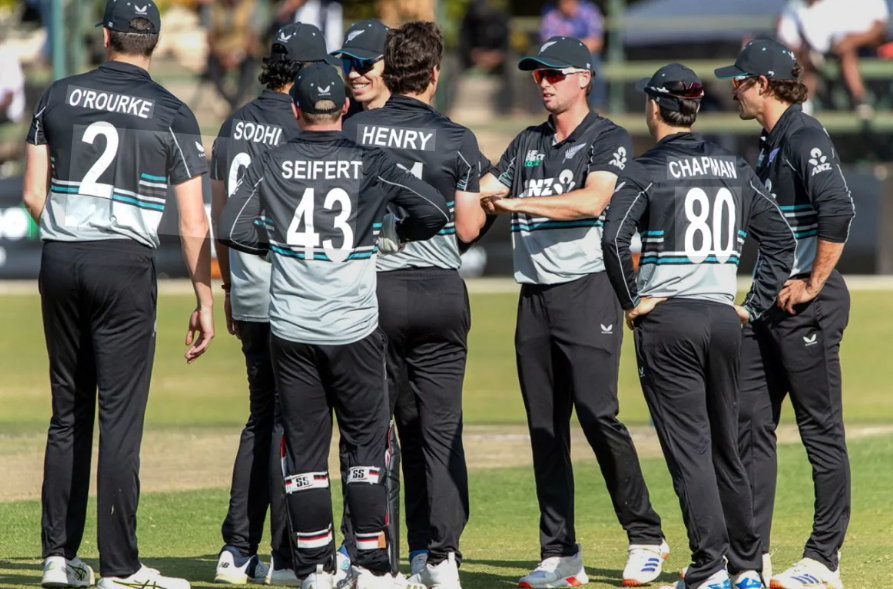
The international cricket meetings between these two teams have developed into a fascinating timeline of contrasting styles and evolving competitiveness. From early encounters marked by experience gaps to modern contests shaped by strategy and preparation, the journey reflects changing eras of the sport. Each match has added new layers of intensity, with players from both sides delivering memorable performances under pressure. Batting resilience, bowling discipline, and tactical awareness have all played key roles in shaping outcomes. Over time, this timeline has become more than just results, turning into a story of growth, challenge, and shifting balance in international cricket history.
Latest Matches Table
Date
Format
Venue
Winner
Margin
07 August 2025
Test
Bulawayo
New Zealand
Innings and 359 runs
30 July 2025
Test
Bulawayo
New Zealand
9 wickets
24 July 2025
T20I
Harare
New Zealand
60 runs
18 July 2025
T20I
Harare
New Zealand
8 wickets
06 August 2016
Test
Bulawayo
New Zealand
254 runs
28 July 2016
Test
Bulawayo
New Zealand
Innings and 117 runs
09 August 2015
T20I
Harare
New Zealand
80 runs
07 August 2015
ODI
Harare
New Zealand
38 runs
All-Time Head-to-Head Record Table
Format
Matches
New Zealand Wins
Zimbabwe Wins
Draws or No Result
Test Matches
19
13
0
6
One Day Internationals
38
27
9
2
Twenty20 Internationals
8
8
0
0
Overall Combined
65
48
9
8
All-Time Batting Leaders Table
Player
Team
Matches
Runs
Highest Score
Average
Ross Taylor
New Zealand
17
1083
173
67.68
Kane Williamson
New Zealand
16
985
113
57.94
Andy Flower
Zimbabwe
19
942
156
41.22
Martin Guptill
New Zealand
21
868
105
48.22
Brendan Taylor
Zimbabwe
22
815
128
37.04
Nathan Astle
New Zealand
18
794
145
44.11
Stephen Fleming
New Zealand
15
741
134
43.58
Alistair Campbell
Zimbabwe
24
708
102
29.50
All-Time Bowling Leaders Table
Player
Team
Matches
Wickets
Best Bowling
Economy Rate
Daniel Vettori
New Zealand
23
48
5 for 30
3.62
Chris Martin
New Zealand
10
34
6 for 26
3.10
Matt Henry
New Zealand
9
29
6 for 39
3.84
Heath Streak
Zimbabwe
25
28
4 for 45
4.12
Shane Bond
New Zealand
6
23
6 for 51
2.88
Kyle Mills
New Zealand
12
21
4 for 27
4.05
Paul Wiseman
New Zealand
5
19
5 for 61
2.95
Mitchell Santner
New Zealand
8
16
3 for 15
4.20
Early Encounters and First International Meetings
The opening phase of meetings between the two sides reflected a clear contrast in structure, experience, and international exposure. One team entered the contest with a developing cricket system, while the other carried the confidence of a more settled international unit. These early matches were often dominated by disciplined bowling and cautious batting approaches, where building partnerships became more important than aggressive scoring. Fielding standards and patience under pressure played a major role in deciding outcomes. Despite the gap in consistency, the emerging side showed flashes of resistance through individual performances, especially in the middle order. These matches laid the foundation for a competitive relationship that slowly gained attention among cricket followers. Over time, these early encounters became reference points for how both teams evolved tactically and mentally in international cricket environments.
Match Type
Dominant Side
Key Feature
Average Runs
Outcome Pattern
ODI
Stronger unit
Controlled bowling
220-260
One-sided
Test
Balanced play
Defensive batting
250-320
Draw heavy
ODI
Stronger unit
Early wickets
200-240
Chase success
ODI
Emerging side
Middle order fight
210-270
Competitive
Emerging Competitiveness Era
As international exposure increased, matches began to show a shift in competitiveness. The gap between the two sides started narrowing, with improved batting techniques and more structured bowling plans from the developing team. The stronger side still maintained an upper hand, but matches were no longer predictable. Key players began to influence games through individual brilliance rather than team dominance alone. Momentum shifts became more frequent, especially in the middle overs where pressure built through dot balls and wicket clusters. This phase also highlighted the importance of adaptability, as teams adjusted to different pitch conditions and match situations. The contests became more engaging, drawing attention from analysts who noted the gradual closing of performance gaps.
Phase
Competitive Level
Key Improvement
Turning Factor
Match Intensity
Early growth
Low-medium
Batting stability
Top order starts
Moderate
Mid phase
Medium
Bowling control
Spin impact
High
Transition
Medium-high
Fielding sharpness
Middle overs
High
Consolidation
High
Tactical awareness
Death overs
Very high
World Stage Pressure Battles
International tournaments brought a different level of intensity, where pressure played as much a role as skill. Matches in global events often tested temperament, especially during knockout or group-stage qualification scenarios. One side relied on experience in handling high-pressure environments, while the other depended on raw determination and occasional match-winning performances. These encounters were marked by slower scoring rates initially, followed by bursts of aggression during the final overs. Tactical decisions such as bowling changes and batting order adjustments often became match-defining moments. Fans witnessed emotional swings as wickets fell in clusters or unexpected partnerships emerged. These games contributed significantly to shaping the rivalry’s identity on the global stage.
Tournament
Pressure Level
Key Performer Type
Match Turning Phase
Result Pattern
World Cup
Very high
Experienced batter
Middle overs
Controlled win
ICC Event
High
Strike bowler
Powerplay
Tight finish
Group Stage
Medium-high
All-rounder
Death overs
Close contest
Qualifier
High
Young talent
Final overs
Unpredictable
Batting Performances and Key Contributors
Batting performances played a defining role in shaping the outcomes of several encounters. Experienced batters often anchored innings, focusing on building partnerships rather than quick scoring. On the other hand, emerging talents provided unexpected breakthroughs with aggressive stroke play. Consistency at the top order was a critical factor, especially in setting or chasing targets. Middle-order stability frequently determined whether a team could recover from early wickets or collapse under pressure. Some innings stood out for their ability to shift momentum completely, turning losing positions into competitive totals. These performances highlighted the importance of adaptability and shot selection in international cricket conditions.
Player Role
Strength Area
Impact Zone
Contribution Type
Match Influence
Opener
Stability
Powerplay
Foundation
High
Middle order
Recovery
Mid innings
Acceleration
Very high
Finisher
Aggression
Death overs
Rapid scoring
High
All-rounder
Balance
All phases
Dual impact
Medium-high
Bowling Impact and Game Changers
Bowling performances often dictated the flow of matches, especially during early overs where breakthroughs set the tone. Fast bowlers used movement and pace variations to challenge batters, while spinners played a crucial role in controlling the middle overs. Wicket-taking spells frequently changed match momentum within a few overs. Pressure created through dot balls forced errors, leading to collapses in several key encounters. The ability to maintain discipline in line and length proved decisive in restricting scoring opportunities. Some bowlers became known for delivering under pressure, particularly in tightly contested games where every run mattered.
Bowling Type
Key Strength
Match Phase
Impact Style
Effectiveness
Fast bowling
Early swing
Powerplay
Breakthrough
High
Spin bowling
Control
Middle overs
Restriction
Very high
Medium pace
Variation
Death overs
Economy
Medium
All-round
Flexibility
All phases
Pressure
High
Strategic Evolution Across Eras
Over time, both sides evolved their strategies to match modern cricket demands. Earlier reliance on conservative gameplay gradually shifted toward more dynamic approaches. Batting orders became flexible, and bowling rotations were optimized based on match situations. Data-driven decisions started influencing field placements and match tactics. One team leaned heavily on structured planning, while the other experimented with adaptive strategies depending on opposition weaknesses. This evolution made encounters more balanced and less predictable, increasing overall competitiveness. Coaches and analysts played a greater role in shaping match outcomes compared to earlier eras.
Era Phase
Strategy Focus
Key Change
Tactical Shift
Outcome Effect
Early
Defensive play
Stability
Fixed roles
Predictable
Mid era
Balanced game
Flexibility
Rotations
Competitive
Modern
Aggressive
Data use
Matchups
Dynamic
Current
Hybrid
Adaptation
Situational
Unpredictable\
Conclusion
The overall timeline of contests between these two cricket teams highlights a journey defined by evolution, adaptation, and competitive spirit. What began as uneven encounters gradually transformed into more balanced and strategically driven matches. Players from both sides contributed significant moments that influenced results and shaped perceptions of strength and consistency. The rivalry now stands as a reflection of changing cricket dynamics, where preparation and execution matter as much as talent. Even though the frequency of matches has reduced, the impact of their shared history continues to hold value in international cricket discussions and statistical records.